Understanding Canadian Trademark Law
Overview of Canadian Trademark Law
Canadian trademark law provides protection to marks by statute under the Trademarks Act and also at common law. Trademark law provides protection for distinctive marks, certification marks, distinguishing guises, and proposed marks against those who appropriate the goodwill of the mark or create confusion between different vendors' goods or services. In Canada, trademark rights can be obtained in two ways: through registration under the Trademarks Act or through use of a mark in Canada over time.Benefits of Trademark Registration
Registration provides proof of trademark ownership and a presumption of validity until proven otherwise. This means that an adverse party could bring a claim challenging the validity of your registration as long as certain conditions are met under the Trademarks Act. Additionally, registration allows you to bring a lawsuit against infringers and prevents others from registering a similar trademark.Types of Trademarks
There are several types of trademarks, including:- Distinguishing guises: These are the visual representations of a trademark, such as logos, emblems, or symbols.
- Certification marks: These are marks used to indicate that a product or service meets certain standards or specifications.
- Proposed marks: These are marks that are proposed for use, but have not yet been registered.
- Collective marks: These are marks used by members of a group or organization to identify themselves.
Canadian Intellectual Property Office

Steps to Register a Trademark
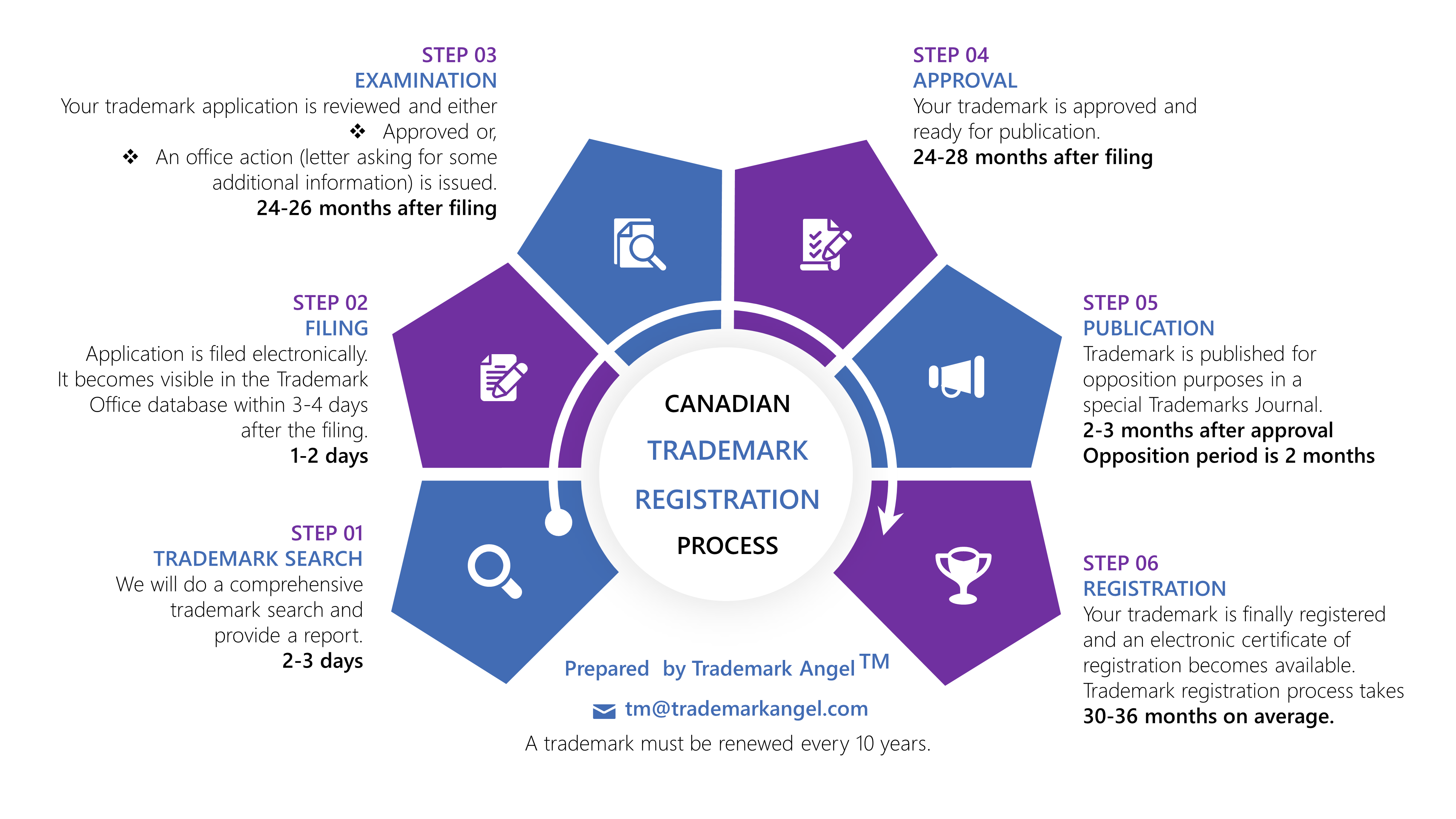
To register a trademark in Canada, you must follow these steps:- Conduct a search of the Trademarks Database to ensure that the desired trademark is available for registration.
- Prepare and file a trademark application with the CIPO.
- Pay the required filing fee.
- Wait for the CIPO to review and process the application.
- Oppose any oppositions to the registration of the trademark.
- Maintain the trademark by filing periodic renewal statements.