Creating a Home Workout Setup for Seniors: A Comprehensive Guide
Staying physically active is essential for seniors to maintain independence, improve health, and prevent age-related declines. However, regular gym visits may not be feasible for seniors due to various reasons such as accessibility, financial constraints, or mobility issues. That's where a well-designed home workout setup comes into play. In this article, we'll explore the importance of home workout setups for seniors, the essential equipment and space-saving solutions, and adaptive tools that promote mobility, strength, and independence.
Benefits of Home Workout Setups for Seniors
- Improved balance, strength, and flexibility
- Enhanced independence and mobility
- Reduced risk of falls and injuries
- Increased confidence and sense of well-being
- Convenience and flexibility to fit workouts into busy schedules
Essential Equipment for Home Workout Setups
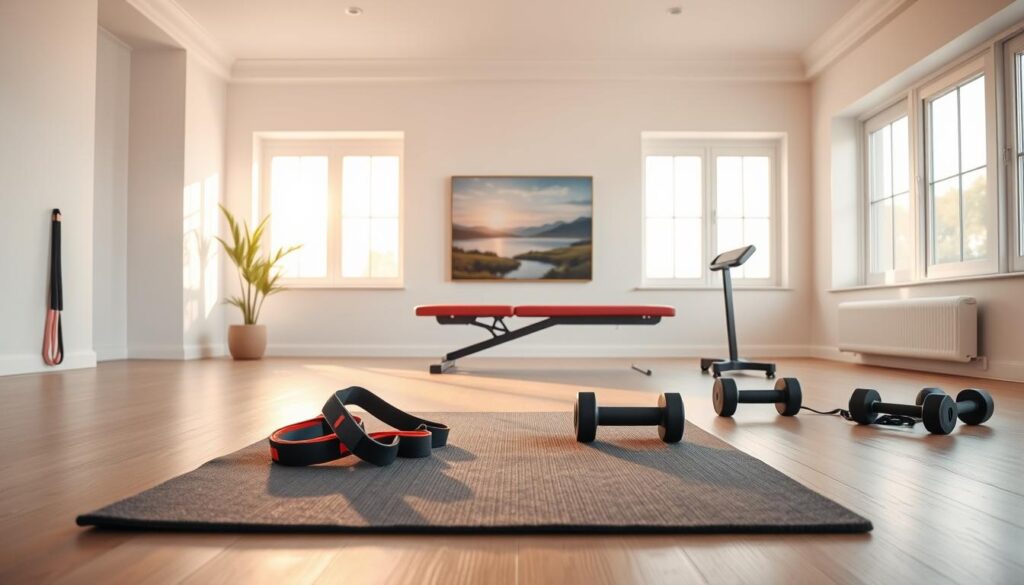
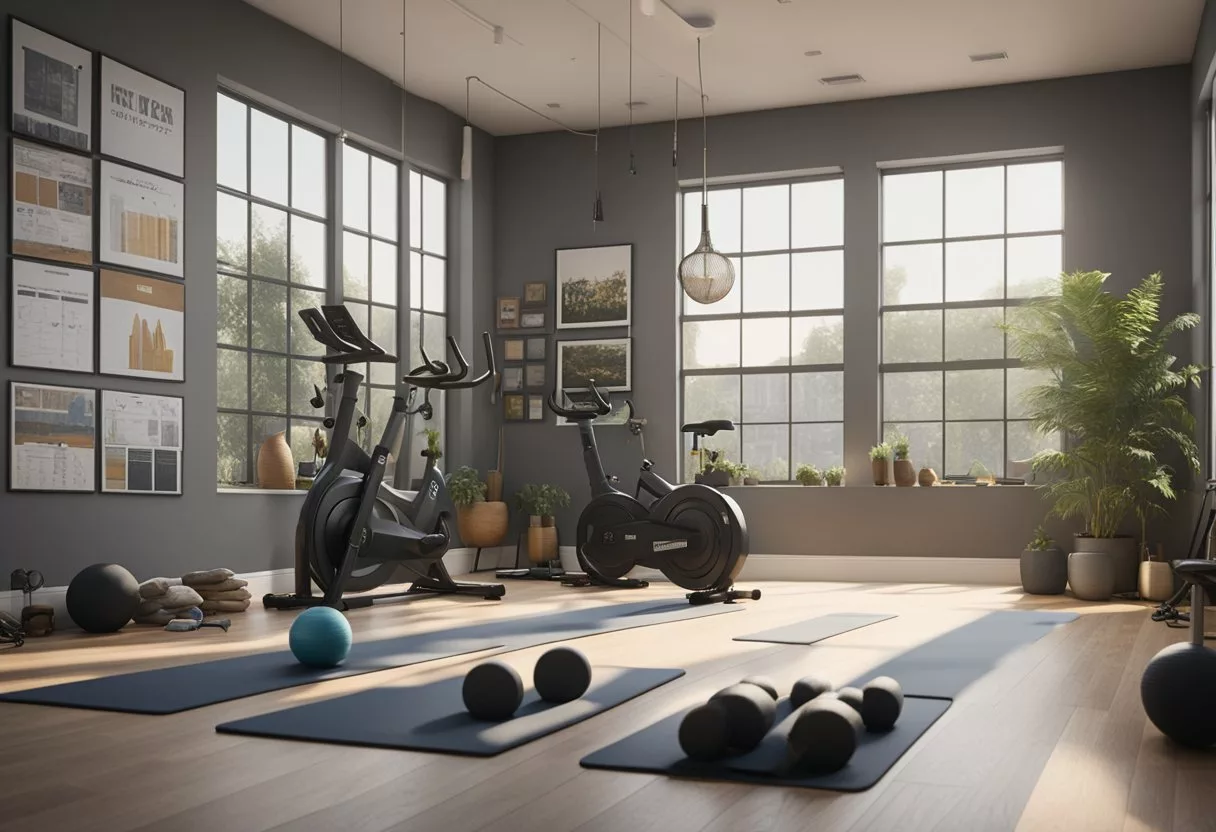
When designing a home workout setup for seniors, it's crucial to consider the equipment that fits their needs and abilities. The following are some must-have items:
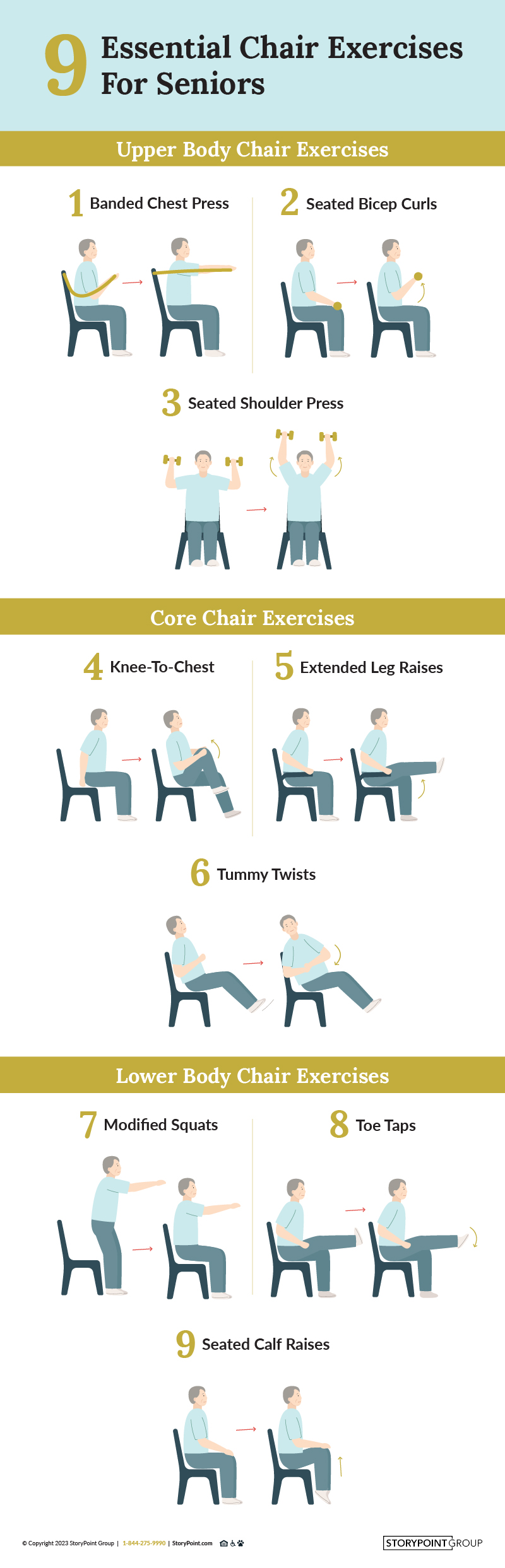
- Chair or bench for strength training exercises
- Resistance bands or light dumbbells for flexibility and strength training
- Exercise balls or balance boards for balance and core strengthening
- Yoga mats or comfortable flooring for low-impact exercises
- Wall-mounted bars or sturdy furniture for grab bars and support
Space-Saving Solutions for Home Workout Setups
Seniors often have limited space in their homes, making it essential to optimize their workout area. Consider the following space-saving solutions:
- Use wall-mounted equipment or storage units to maximize floor space
- Invest in compact or foldable exercise equipment, such as resistance bands or yoga mats
- Utilize corners or underbed storage spaces for infrequently used equipment
- Choose multi-purpose equipment that serves multiple functions, like a balance ball that doubles as a seat
Adaptive Tools for Home Workout Setups
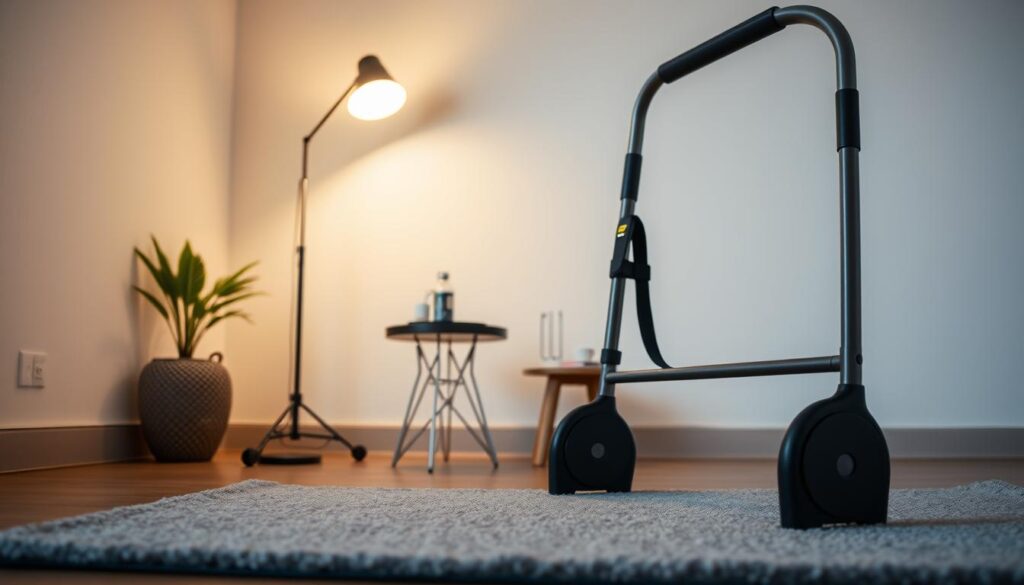
Seniors may require special considerations when it comes to equipment and exercises. The following adaptive tools can help:
- Seated or reclined exercise positions for those with mobility or balance issues
- Handheld or lap-based resistance bands for reduced strain on joints
- Exercise equipment with adjustable or ergonomic designs for enhanced comfort and safety
- Safety harnesses or support systems for added stability and security
Designing a Senior-Friendly Home Workout Setup
When designing a home workout setup for seniors, it's essential to prioritize their safety, comfort, and accessibility. Consider the following tips:
- Consult with a healthcare professional or fitness expert to create a personalized workout plan
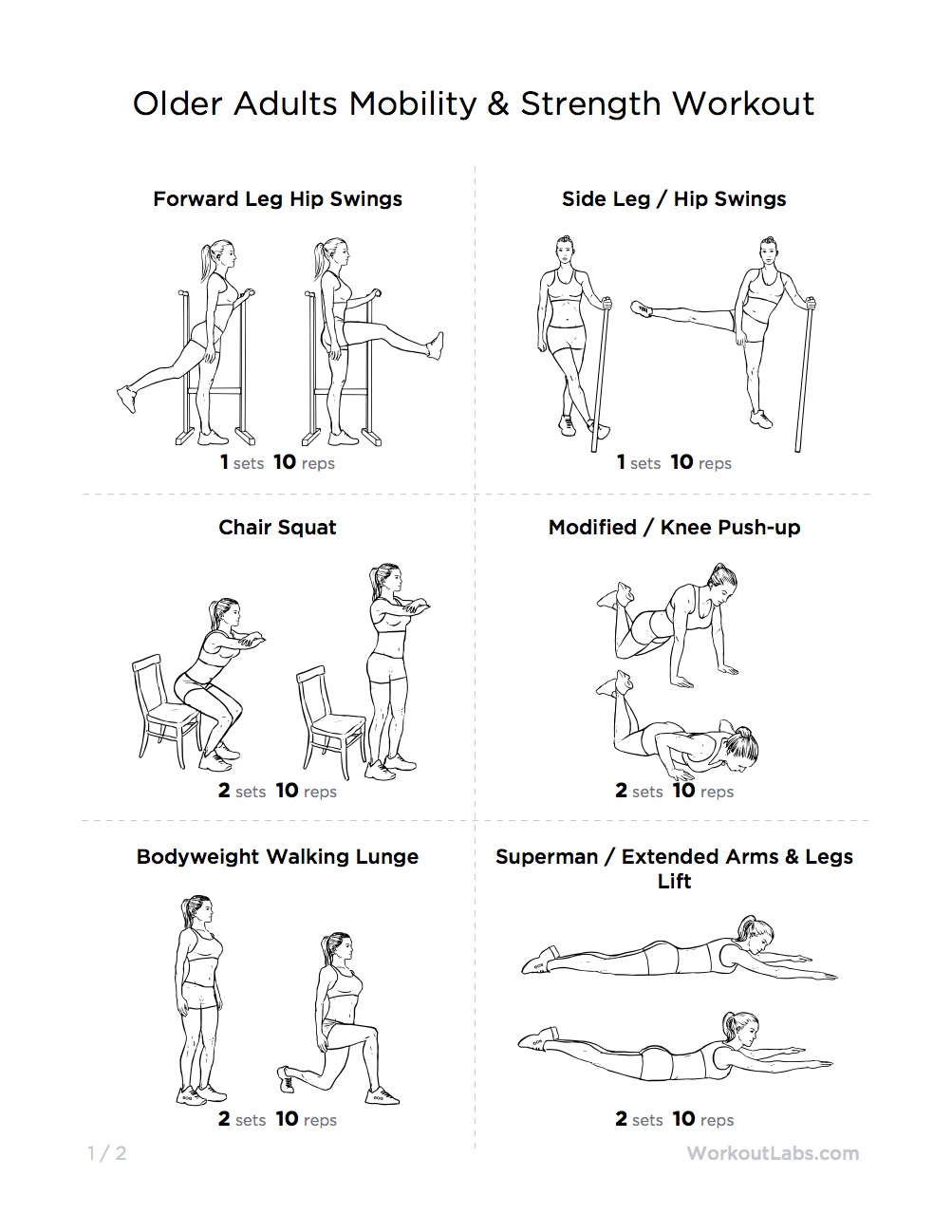
- Start with low-impact exercises and gradually progress to more challenging activities
- Choose equipment and exercises that incorporate everyday movements and activities
- Emphasize balance, flexibility, and strength training exercises to reduce the risk of falls
Conclusion
Creating a home workout setup for seniors is a thoughtful and essential investment in their physical and mental well-being. By incorporating essential equipment, space-saving solutions, and adaptive tools, seniors can maintain their independence, improve their health, and prevent age-related declines. Prioritize their safety, comfort, and accessibility when designing a workout setup, and don't hesitate to seek professional guidance to create a personalized plan.