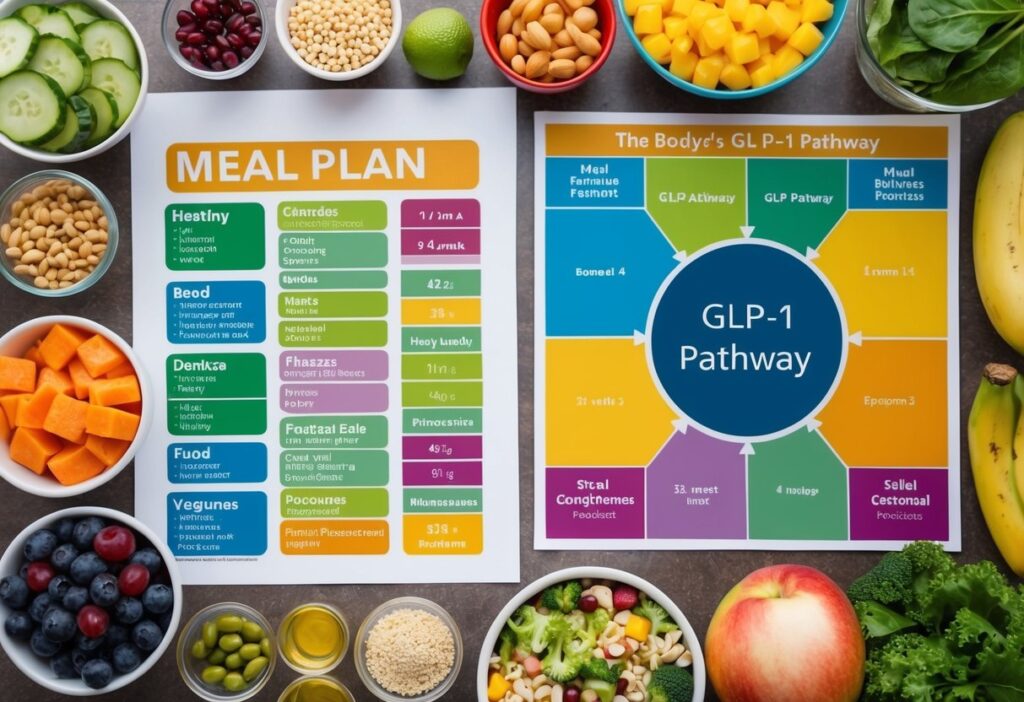
Mastering GLP-1 and Low Sodium Meal Planning for Sustainable Weight Management
If you're taking GLP-1 medications for weight loss, you're likely aware of the importance of a balanced diet in achieving your goals. However, navigating the complexities of low-sodium meal planning can be daunting, especially when combined with the unique digestive effects of GLP-1 agonists. In this article, we'll delve into the world of GLP-1 and low sodium meal planning, providing you with practical tips and expert advice to optimize your weight loss journey.
Understanding GLP-1 and Low Sodium Meal Planning
GLP-1 agonists, such as semaglutide and tirzepatide, work by slowing gastric emptying, allowing food to stay in your stomach for longer. This requires choosing easily digestible, low-sodium foods to minimize discomfort and support weight loss. A low-sodium diet is also crucial for managing blood pressure, another key benefit of GLP-1 medications.
Setting the Foundation for Success
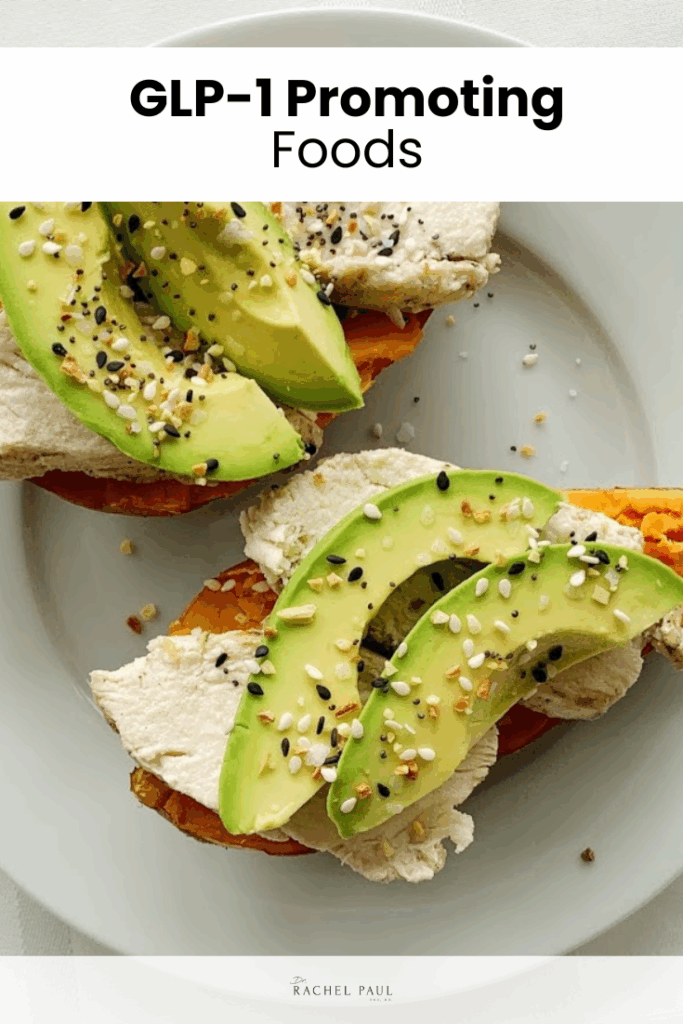
To create a successful GLP-1 and low sodium meal plan, it's essential to focus on nutrient-dense foods that promote satiety and support weight management. Here are some key principles to keep in mind:
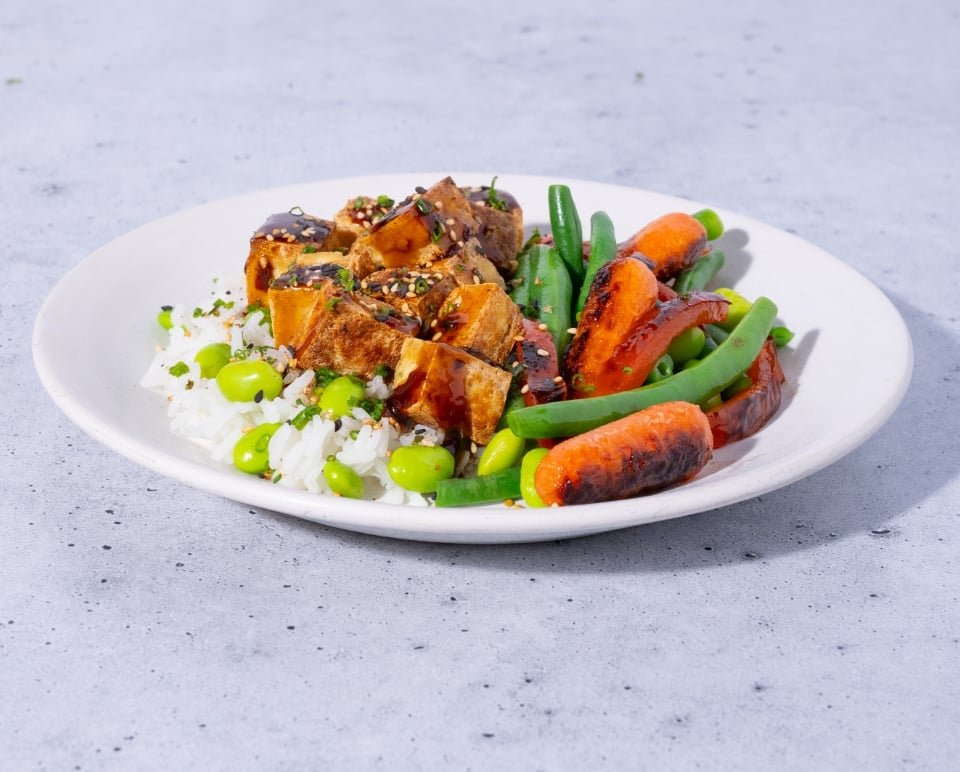
- High-Protein Intake: Aim for 0.8-1 gram of protein per pound of body weight from sources like lean meats, fish, eggs, tofu, and legumes.
- Strategic Low-Carb Intake: Focus on complex carbohydrates like whole grains, fruits, and vegetables, while limiting refined carbohydrates and added sugars.
- High Fiber Content: Include foods rich in fiber, such as fruits, vegetables, and whole grains, to promote satiety and support digestive health.
- Low Sodium Intake: Limit sodium-rich foods and aim for no more than 2,300 milligrams per day.
Meal Planning Strategies
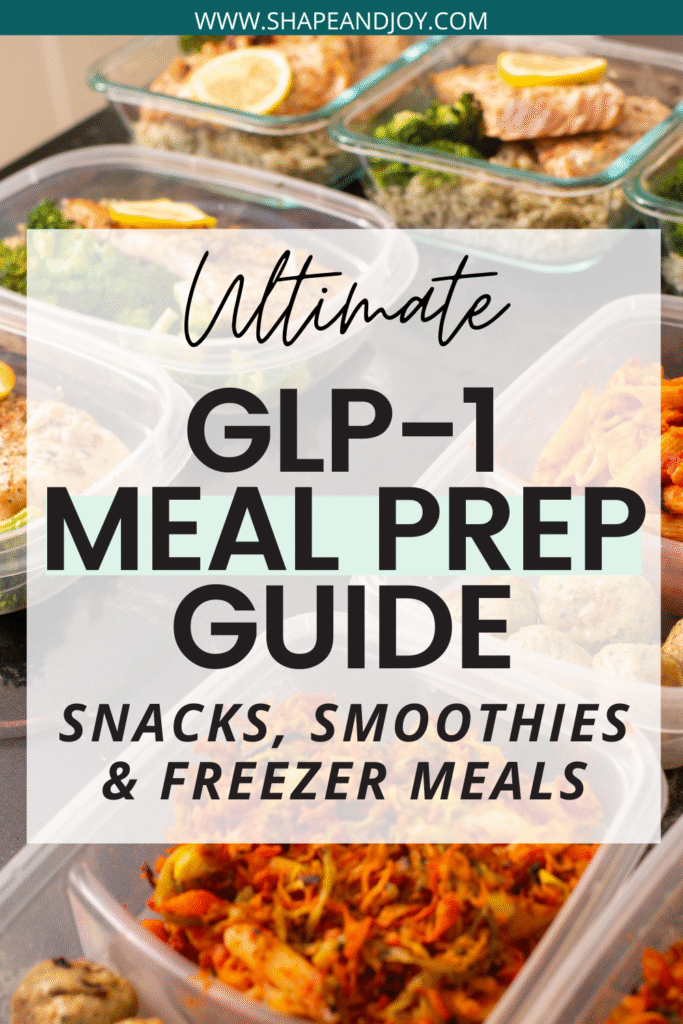
To make the most of your GLP-1 and low sodium meal plan, consider the following strategies:
- Portion Control: Use measuring cups and a food scale to gauge your portion sizes and ensure you're not overeating.
- Frequent Small Meals: Divide your daily calories into 4-6 smaller meals to manage side effects and promote weight loss.
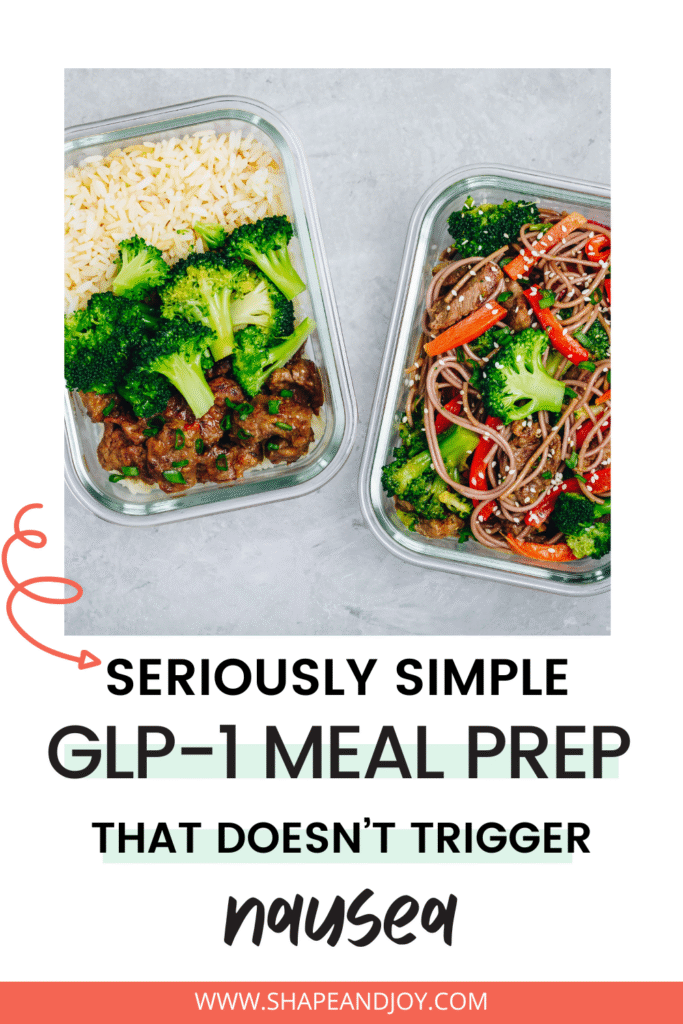
- Meal Prep: Prepare your meals in advance to save time and ensure you're always eating nutrient-dense foods.
- Flexibility: Be prepared to adjust your meal plan as needed to accommodate changes in your appetite or schedule.
Sample Meal Plan
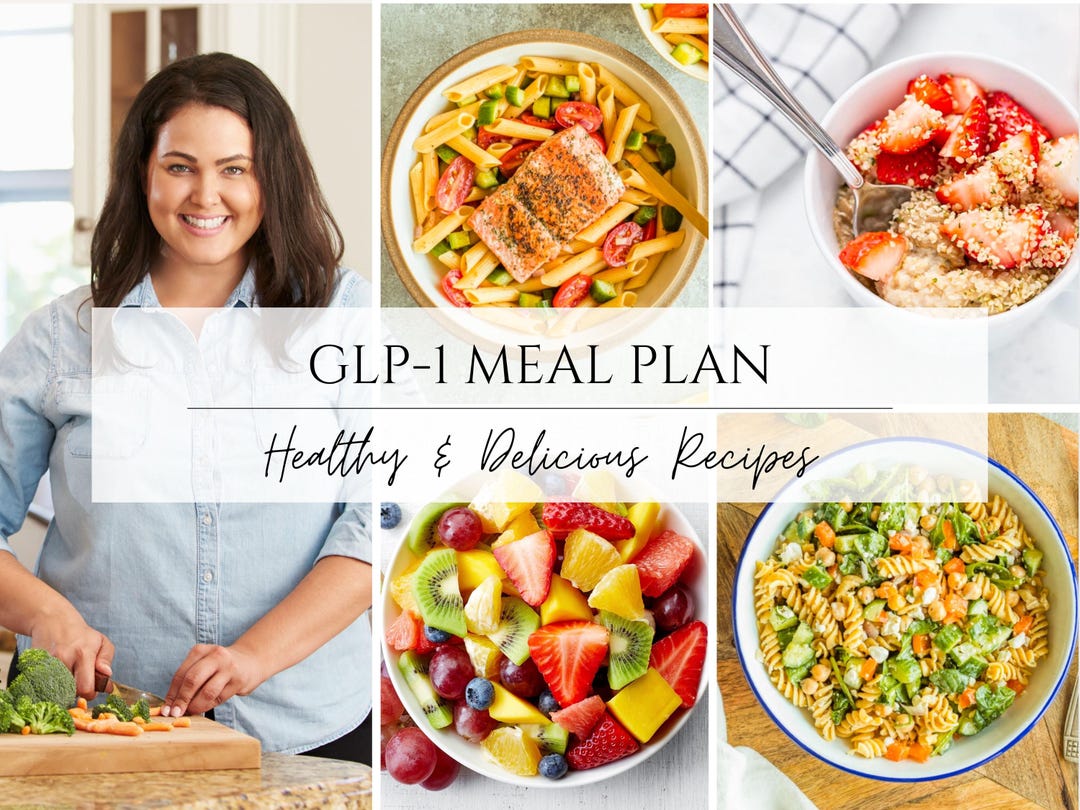
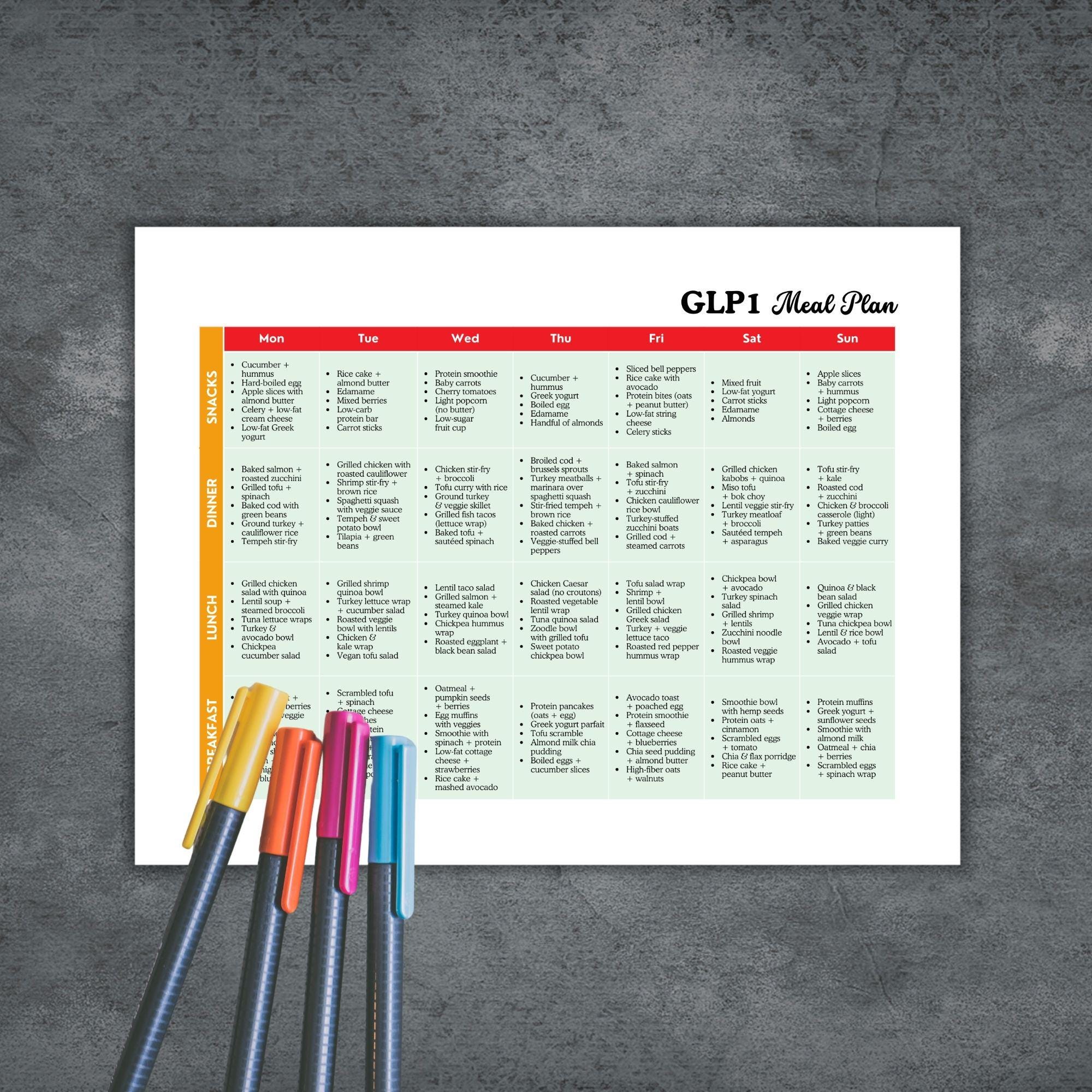
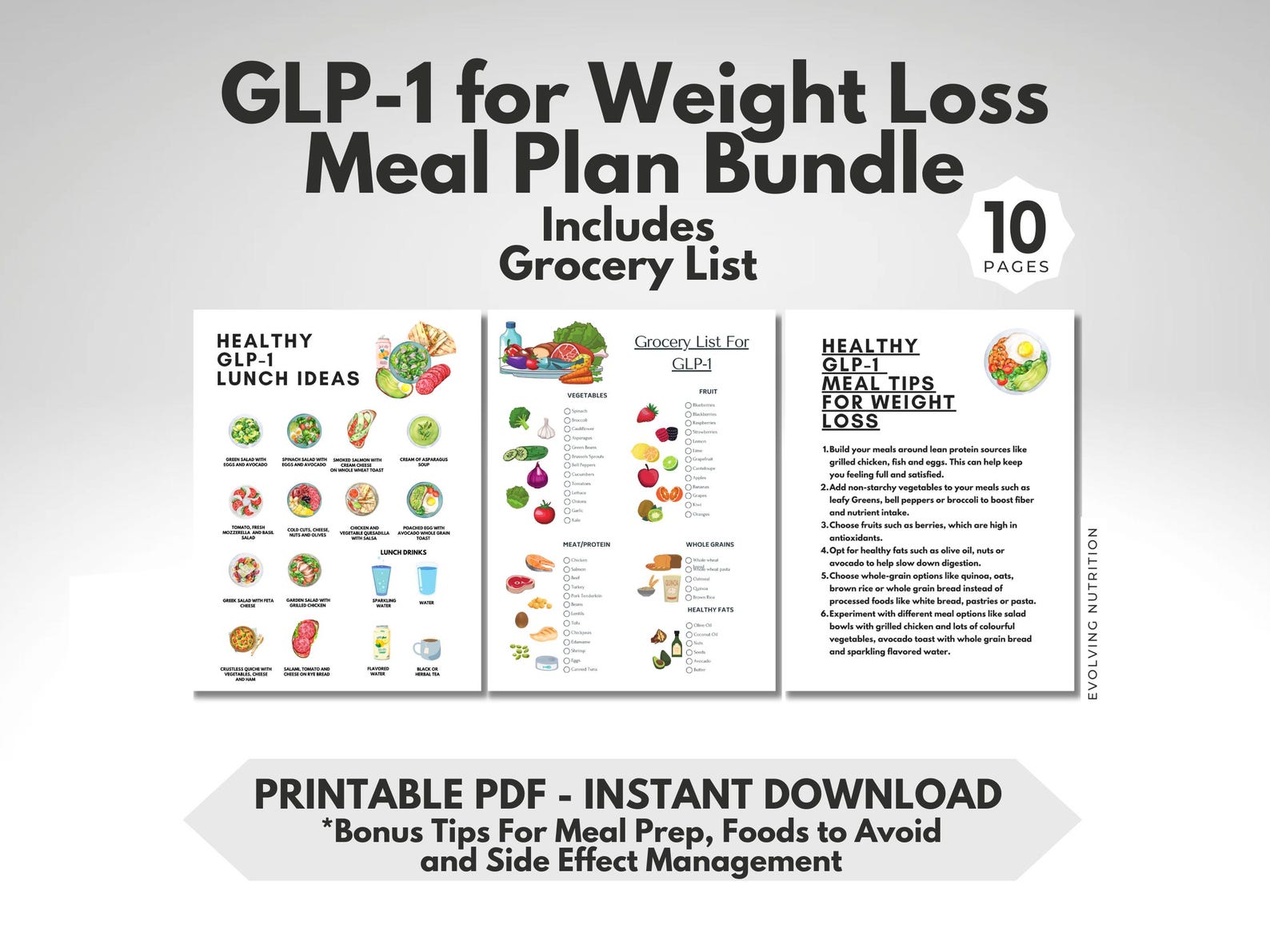
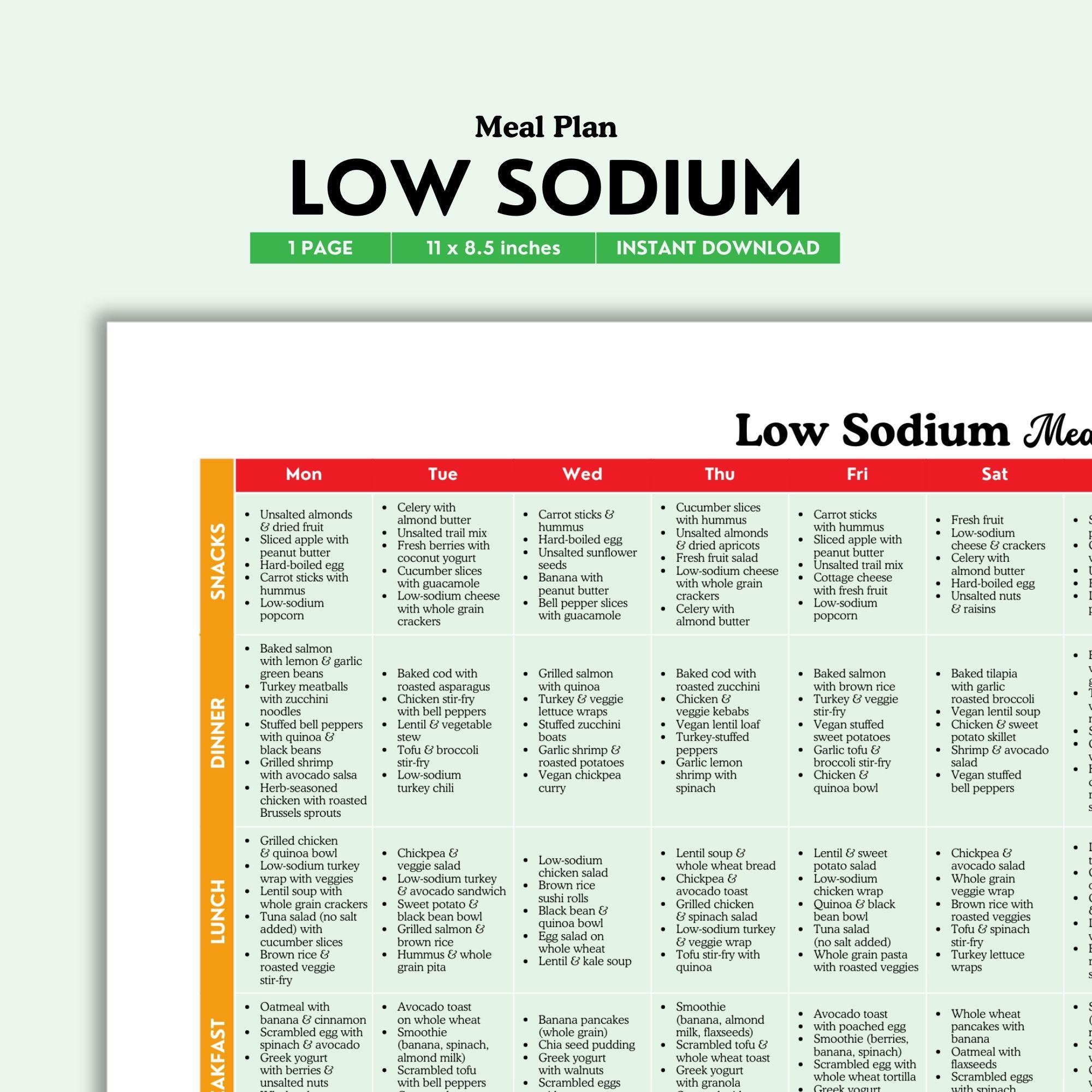
Here's a sample 7-day meal plan that incorporates the principles outlined above:
- Monday:
- Breakfast: Oatmeal with banana, almond milk, and walnuts (300 calories, 15g protein)
- Lunch: Grilled chicken breast with roasted vegetables and quinoa (400 calories, 35g protein)
- Dinner: Baked salmon with sweet potato and green beans (500 calories, 30g protein)
- Tuesday:
- Breakfast: Greek yogurt with berries and granola (300 calories, 15g protein)
- Lunch: Turkey and avocado wrap with mixed greens (500 calories, 25g protein)
- Dinner: Grilled chicken breast with brown rice and steamed broccoli (500 calories, 30g protein)
- Wednesday:
- Breakfast: Smoothie bowl with protein powder, banana, spinach, and almond milk (400 calories, 20g protein)
- Lunch: Lentil soup with whole grain bread and a side salad (500 calories, 20g protein)
- Dinner: Grilled shrimp with roasted asparagus and quinoa (400 calories, 20g protein)
Conclusion
A well-planned GLP-1 and low sodium meal plan is crucial for achieving sustainable weight management on GLP-1 medications. By focusing on nutrient-dense foods, strategic meal planning, and portion control, you can minimize side effects and support your weight loss journey. Remember to stay flexible and adjust your meal plan as needed to ensure long-term success. Consult with a healthcare professional or registered dietitian for personalized guidance and support.



:max_bytes(150000):strip_icc()/canned-tuna-rice-bowl-beauty-075_preview_maxWidth_4000_maxHeight_4000_ppi_300_quality_100-aa429a0bf6ba46ec9ed59ebfebe39087.jpg "PDFProtein Balance for GLP-1s Meal Plan - Mayo Clinic Diet")